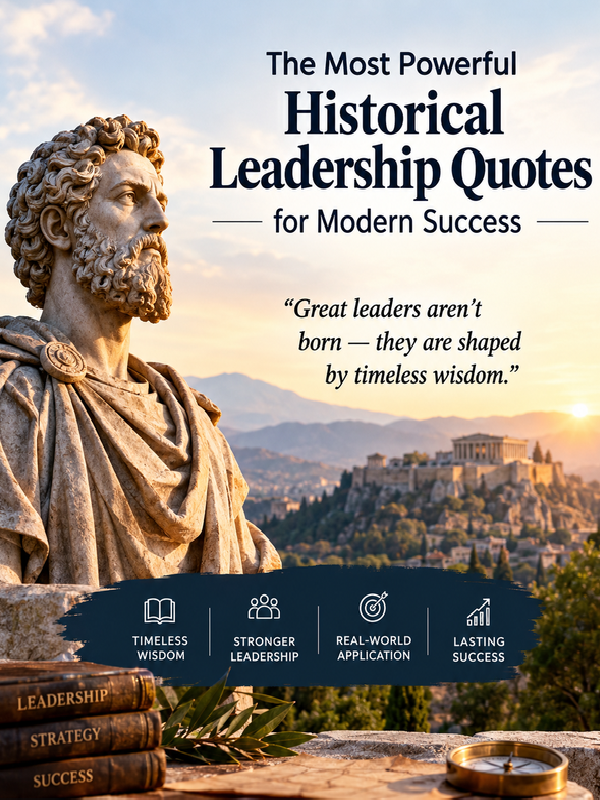
The Most Powerful Historical Leadership Quotes for Modern Success And Self Growth
Historical leadership quotes remain useful because the problems leaders face—choosing priorities, guiding people, handling pressure, and making difficult decisions—still require judgment. This collection brings together best leadership quotes from historical thinkers and modern leadership voices, with context for using their ideas today. You can also explore more leadership and motivational material in the GetMotivatedQuotes collection.
The purpose is not to treat an old sentence as a universal rule. A strong leadership quote becomes useful when you understand who said it, what problem it addressed, and how its central idea can be adapted to a modern team, organization, or personal leadership challenge.
Why Ancient Wisdom for Modern Success Matters Today
Bridging the Gap Between Historical Figures and Modern Managers
Ancient leadership writing often dealt with problems that remain recognizable: deciding when to confront a threat, controlling one’s own reactions, and coordinating people toward a shared objective. The context was different, but the underlying questions of judgment and responsibility can still provide useful frameworks for modern leaders.
Sun Tzu’s The Art of War, for example, is fundamentally concerned with strategy, conflict, preparation, and the consequences of decisions. The surviving text also places preservation and strategic advantage above simply winning through destruction. Source: Project Gutenberg — The Art of War
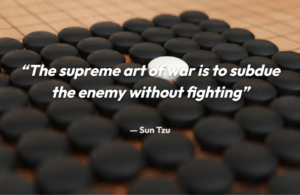
“The Supreme Art Of War Is To Subdue The Enemy Without Fighting.”
— Sun Tzu
 View this quote on GetMotivatedQuotes
For a modern manager, the useful lesson is not literal warfare. It is the value of solving a difficult problem through preparation, positioning, negotiation, or better strategy before escalation becomes necessary.
The Psychology of Using the Best Leadership Quotes
A leadership quote can work as a compact mental reminder. Instead of providing a complete leadership system, it reduces a broader idea to a sentence that can be recalled when a decision or challenge makes the principle relevant.
That is why a line such as:
“A Leader Is One Who Knows The Way, Goes The Way, And Shows The Way.”
— John C. Maxwell
View this quote on GetMotivatedQuotes
works particularly well as a leadership prompt. The three verbs create a simple progression: understand the direction, demonstrate commitment through your own behavior, and make the path understandable to other people. Maxwell’s published leadership material uses the same formulation when discussing what leaders need to do. Source: John Maxwell
The value of historical leadership quotes therefore comes less from age alone and more from whether the underlying idea helps clarify a real leadership decision.
What Historical Quotes Can Teach—and What They Cannot
Historical quotes are evidence of how a person or tradition expressed an idea; they are not automatically evidence that the idea is universally correct. Context matters, and some famous quotations have disputed or inaccurate attributions.
For modern leaders, the safest approach is to ask three questions: Who said it? What did it mean in its original context? What part of the idea remains useful today? That approach preserves the value of ancient wisdom for modern success without turning every quotation into timeless law.
Motivational Quotes for Managers to Build Stronger Teams
Short Leadership Quotes for Team Building Activities
Short statements are useful in meetings, presentations, team notes, or internal communications because the main idea can be understood quickly. But a short quote should support a discussion rather than replace one.
Your collection includes a particularly direct example:
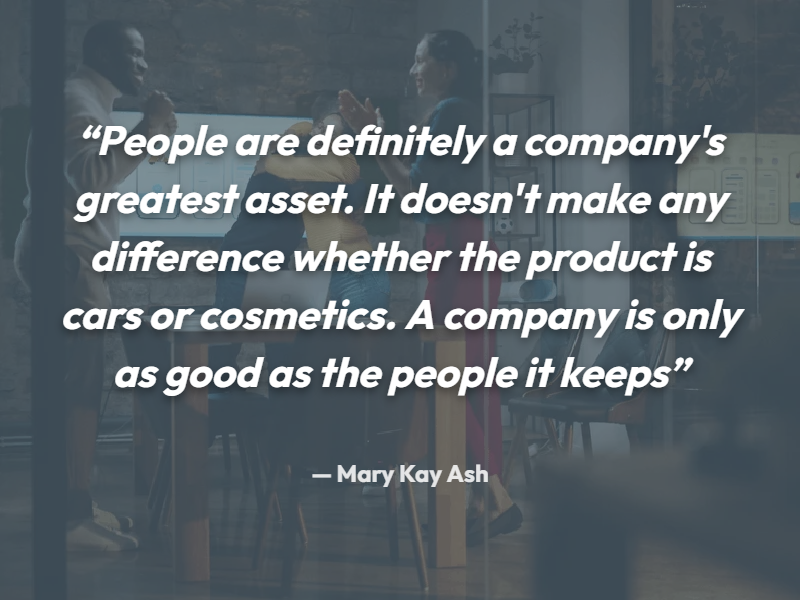
“People Are Definitely A Company’s Greatest Asset. It Does Not Make Any Difference Whether The Product Is Cars Or Cosmetics. A Company Is Only As Good As The People It Keeps.”
— Mary Kay Ash
View this quote on GetMotivatedQuotes
The quotation is attributed to Mary Kay Ash and appears in Mary Kay, You Can Have It All: Lifetime Wisdom from America’s Foremost Woman Entrepreneur. Source: AZQuotes citation of the book source
For a manager, its practical use is straightforward: team performance cannot be separated from the people doing the work. Use it as a starting point for discussing hiring, development, recognition, retention, and the conditions your team needs to perform well.
Famous Quotes About Leading Change and Innovation
Leading change requires more than enthusiasm for a new direction. It involves deciding what deserves attention, what must change, and what should deliberately remain different.
This idea is captured particularly well by Michael Porter’s strategy work:
“Strategy Is About Making Choices, Trade-Offs. It Is About Deliberately Choosing To Be Different.”
— Michael Porter
View this quote on GetMotivatedQuotes
Porter’s Harvard Business Review article explains that strategy involves choosing a different set of activities and making trade-offs; without trade-offs, organizations can lose the distinctiveness that strategy is supposed to create. Source: Harvard Business Review — What Is Strategy?
For managers guiding change, the practical implication is that not every new idea deserves equal resources. A clear direction often requires saying no to some alternatives.
From Authority to Responsibility
Leadership is not simply the possession of authority. Modern leadership writing increasingly emphasizes what a leader does for the people and mission they are responsible for.
Your collection captures this idea in a concise form:
“Leadership Is Not About Being In Charge. It Is About Taking Care Of Those In Your Charge.”
— Simon Sinek
View this quote on GetMotivatedQuotes
Sinek presents the same principle in his Leaders Eat Last material, describing leadership as taking care of the people in your charge and connecting that responsibility with creating conditions in which teams can work together effectively. Source: Simon Sinek
For team building, the quote creates a useful shift in perspective: instead of asking only what employees should deliver, a leader can also ask what environment, clarity, support, and accountability the team needs to deliver it.
Stoicism and Strategy: Timeless Philosophies for Executives
Stoic Quotes for Leadership and Emotional Intelligence
Stoicism gives leadership a particularly useful focus on self-command. Epictetus, one of the major Stoic teachers, repeatedly connected freedom with mastery over one’s own impulses and conduct.
Your site includes this concise statement:
“No Man Is Free Who Is Not Master Of Himself.”
— Epictetus

View this quote on GetMotivatedQuotes
The wording appears in The Golden Sayings of Epictetus, where it is presented as part of his teachings on freedom and self-mastery. Source: Project Gutenberg — The Golden Sayings of Epictetus
For leadership, the idea is highly practical: before trying to manage other people’s reactions, a leader must be able to manage their own. That makes this one of the most relevant Stoic quotes for leadership when the challenge is pressure, impatience, or emotional reaction.
Roman Emperor Quotes on Leadership and Discipline
Marcus Aurelius is unusual among Stoic thinkers because he was both a philosopher and Roman emperor. The Stanford Encyclopedia of Philosophy notes that his Meditations were written as private reflections connected with his effort to practice Stoic principles, including virtue, self-control, and the disciplined treatment of other people. Source: Stanford Encyclopedia of Philosophy — Marcus Aurelius
Your site publishes this widely circulated version:
“You Have Power Over Your Mind—Not Outside Events. Realize This, And You Will Find Strength.”
— Marcus Aurelius
View this quote on GetMotivatedQuotes
There is an important attribution note for readers: this exact modern wording is generally treated as a paraphrase of a passage in Meditations 8.47 rather than a verbatim translation. Source: comparison of the circulating wording with Meditations 8.47
That distinction actually strengthens the article’s credibility. The underlying Stoic idea is genuine, while the popular English wording has been modernized. For executives, the practical lesson is to distinguish between what can be controlled directly and what lies outside one’s control.
Strategic Leadership Quotes for Executives
Modern executives face a problem that looks very different from ancient warfare but still involves the same fundamental requirement: limited resources must be directed toward the most important objectives.
Richard Rumelt expresses this principle in Good Strategy/Bad Strategy:
“Good Strategy Works By Focusing Energy And Resources On One, Or A Very Few, Pivotal Objectives Whose Accomplishment Will Lead To A Cascade Of Favorable Outcomes.”
— Richard Rumelt
View this quote on GetMotivatedQuotes
INSEAD’s discussion of strategy quotes this principle while emphasizing the importance of prioritization and focus, and Rumelt’s work distinguishes strategy from a simple list of goals. Source: INSEAD Knowledge
For an executive, the lesson is practical: identify the small number of objectives that can materially change the situation, then align people and resources around them. More priorities do not automatically produce more progress.
Navigating Adversity: Leadership Quotes for Difficult Times
Leadership becomes most visible when circumstances become difficult. During a crisis, people need direction, but they also need a leader who can distinguish between what must be addressed immediately and what requires patience and persistence.
Finding Resilience in Historical Crises
Winston Churchill’s wartime speeches provide a well-documented example of leadership communication during prolonged uncertainty. In his 29 October 1941 speech at Harrow School, Churchill described the preceding period as one of severe setbacks and emphasized perseverance rather than surrender. Source: International Churchill Society
Your collection has a similarly direct message:
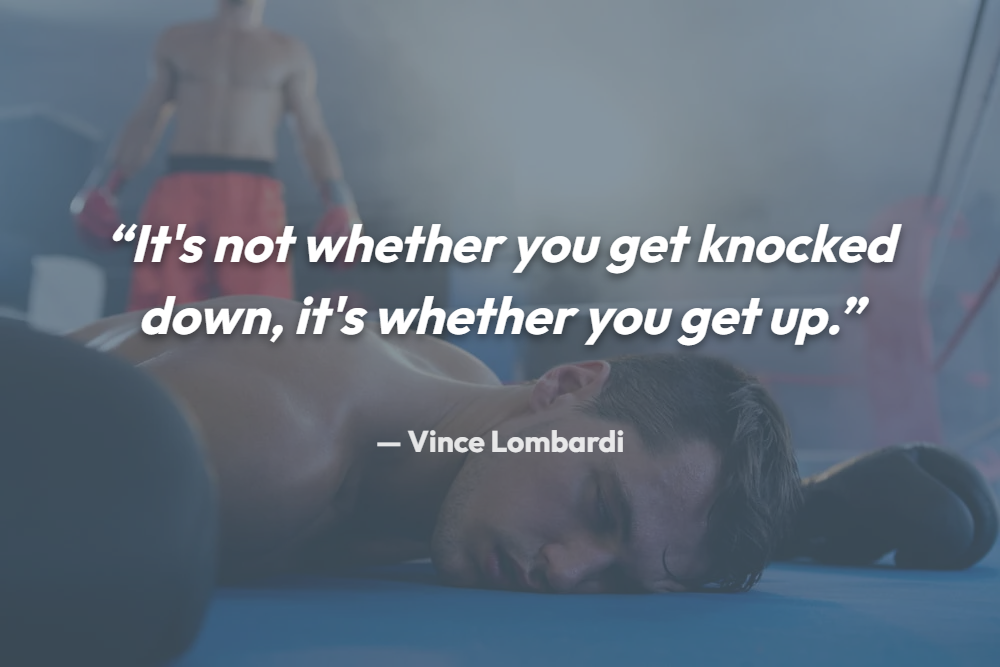
“It Is Not Whether You Get Knocked Down, It Is Whether You Get Up.”
— Vince Lombardi
View this quote on GetMotivatedQuotes
The value of this idea for a leader is practical: a setback should not automatically become the definition of the situation. The next leadership task is to determine what happened, what can still be controlled, and what the team needs to do next.
Churchill’s own 1941 speech reinforces this distinction. He described the lesson of the previous year as perseverance through a long and difficult struggle rather than expecting every day to bring an immediate victory. Source: International Churchill Society
Communicating Vision During Uncertainty
A leader’s communication becomes particularly important when people do not know what will happen next. Research on organizational change has found that employees’ perceptions of communication quality can influence their openness toward change, with uncertainty helping explain part of that relationship. Source: Taylor & Francis — Uncertainty during Organizational Change
That makes clarity more useful than empty reassurance. During a difficult transition, leaders should explain what is known, acknowledge what remains uncertain, and communicate what the team is expected to do next.
Your quote:
“A Leader Is One Who Knows The Way, Goes The Way, And Shows The Way.”
View this quote on GetMotivatedQuotes
fits this idea especially well. Its practical message is that leadership involves understanding the direction, demonstrating commitment, and making that direction visible to others.
Maintaining Perspective When Pressure Rises
Leaders also have to separate the problem itself from their immediate emotional reaction to it. The Stoic tradition repeatedly emphasizes distinguishing what is within one’s control from what is not, a theme that later became especially prominent in discussions of Marcus Aurelius and Stoic practice. Source: Stanford Encyclopedia of Philosophy — Marcus Aurelius
Your collection expresses this principle in a widely circulated Marcus Aurelius passage:
“You Have Power Over Your Mind—Not Outside Events. Realize This, And You Will Find Strength.”
View this quote on GetMotivatedQuotes
For a manager facing a difficult period, the practical application is straightforward: concentrate attention on decisions, communication, preparation, and behavior that can actually be influenced rather than spending the same energy on uncontrollable outcomes.
How to Apply These Best Leadership Quotes Daily
Using Quotes to Drive Strategy Execution
A leadership quote becomes more useful when it is connected to an actual decision. Rather than opening a meeting with a quotation and immediately moving on, use it to frame one practical question.
For example, your quote:
“Good Strategy Works By Focusing Energy And Resources On One, Or A Very Few, Pivotal Objectives Whose Accomplishment Will Lead To A Cascade Of Favorable Outcomes.”
View this quote on GetMotivatedQuotes
can become a discussion prompt: Which one or two objectives deserve the team’s strongest attention this week?
That application is consistent with Richard Rumelt’s distinction between strategy and simply collecting goals. His work emphasizes identifying the important challenge and coordinating actions around it. Source: UCLA Anderson Review
Build Quotes Into Meetings Without Making Them Clichés
A quote works better in a meeting when it solves a communication problem. You can use a short leadership quote to introduce a discussion about priorities, team responsibility, decision-making, or change, then immediately connect the statement to the team’s current situation.
For example:
Quote: “Management Is Doing Things Right; Leadership Is Doing The Right Things.”
Discussion: Which decision in front of us requires us to choose the right priority rather than simply execute efficiently?
View this quote on GetMotivatedQuotes
This turns the quotation into a management prompt instead of decorative text.
Create and Share Your Own Quote Graphics
A strong leadership quotation can become a useful visual reminder for a presentation, internal communication, personal workspace, or team message. Your GetMotivatedQuotes Create Quote tool can be used to turn a selected quotation into a shareable visual.
For example, “Focus On Being Productive Instead Of Busy”
focus-on-being-productive-instead-of-busy
works well as a compact visual cue for a team working through competing priorities.
View the quote on GetMotivatedQuotes
The principle is simple: use the visual to reinforce a leadership idea that is already relevant to the work, not to replace the conversation or decision behind it.
Frequently Asked Questions About Historical Leadership Quotes
What Makes a Historical Leadership Quote Relevant Today?
A historical leadership quote can remain useful when the principle behind it applies to a modern leadership problem. The historical setting may be completely different, but ideas involving judgment, responsibility, discipline, strategy, communication, and resilience can still provide useful prompts for reflection.
The important step is to understand the original context before applying the quotation to a modern workplace.
How Can Managers Effectively Use Quotes in Meetings?
Use a quote to introduce a specific leadership question rather than reading it as a standalone inspirational message. A manager can use one to frame a discussion about priorities, team responsibility, change, conflict, or decision-making, then ask the team how the principle applies to the current situation.
For example, a strategy quote can introduce a conversation about priorities, while a resilience quote can frame a discussion about how the team should respond to a setback.
Are Historical Leadership Quotes Always Accurate?
No. Famous quotations can be shortened, modernized, translated differently, or attributed incorrectly over time. Even well-known examples sometimes circulate in wording that differs from the original source.
For that reason, reliable quote research should distinguish the original source, historical context, and later popular wording. The International Churchill Society, for example, documents the exact context of Churchill’s famous “never give in” speech and explains a common misunderstanding about where it was delivered. Source: International Churchill Society
When using a quotation professionally, verifying the attribution is more valuable than simply choosing the most familiar version.
Turn a Leadership Quote Into a Visual Reminder
A powerful leadership idea is easier to revisit when it is placed where you and your team can actually see it. A short statement about focus, discipline, or responsibility can work as a reminder during a busy workday without replacing the decisions and actions that leadership requires.
For example, “Focus On Being Productive Instead Of Busy” can become a simple visual reminder for a team working through competing priorities.
Create your own leadership quote graphic with the GetMotivatedQuotes Quote Generator.
Create a Leadership Quote for Your Team, Workspace, or Presentation
Different situations call for different messages. A manager preparing a team meeting may want a quote about responsibility, while an executive may prefer a statement about strategy, focus, or disciplined execution.
Your existing collection includes concise options such as “Management Is Doing Things Right; Leadership Is Doing The Right Things” and “A Leader Is One Who Knows The Way, Goes The Way, And Shows The Way.” These can be turned into visual cards for presentations, internal communications, workspaces, or personal reminders.
Use the GetMotivatedQuotes Create Quote tool to turn a quote into a personalized visual without leaving the page.
Find More Leadership Wisdom and Make It Your Own
Historical leadership quotes become more useful when you can return to the ideas that match your current challenge. Browse the GetMotivatedQuotes leadership and motivational quotes collection to explore messages about strategy, discipline, productivity, resilience, leadership, and personal growth.
Found a quote that fits your leadership philosophy? Turn it into a visual with the GetMotivatedQuotes Quote Generator and keep the idea where you can put it into practice.